Blog post
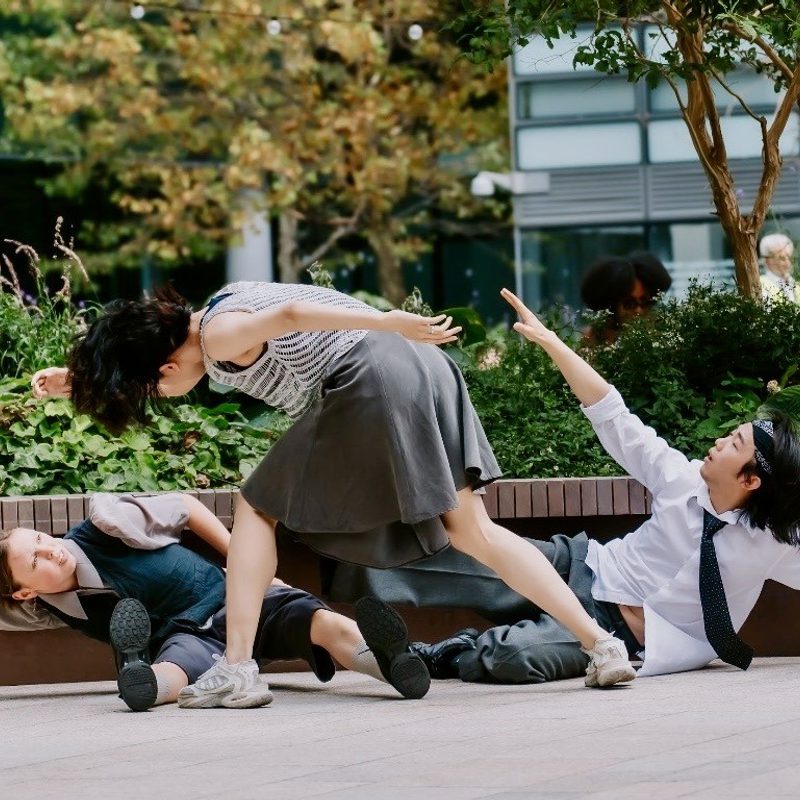
In the corner of a large commercial building lies a quiet, hidden jungle-like sanctuary. Within this secluded space stand several tent-like structures of various sizes, woven from curved wooden sticks. Among these structures, surrounded by plants and greenery, the dancers begin an intimate dialogue through their bodies. Their movements unfold through different forms of touch, connection, breathing, and physical transformation.
Today, I had the opportunity to observe the choreographic duo FUBUNATION working with three duets — two male dancers, two female dancers, and a male-female pairing. Each duet presented a distinct movement vocabulary, which seemed to have been developed collaboratively by the dancers themselves and further refined by the choreographers. The dancers clearly knew what they were doing, yet the true choreographic vision emerged through the quality of movement — the question of how the movements were performed.
Throughout the rehearsal, the choreographers calmly observed the dancers’ movement exploration and then provided subtle guidance to reveal the qualities of intimacy, care, and bonding. They kept reminding the dancers:
“Slower.”
“Lighter.”
“Don’t make it too performative.”
“Make the movement smaller; don’t extend it too much.”
“Don’t project your gaze outward so strongly.”
“Don’t simply perform the movements while allowing nothing to happen. There needs to be a dialogue within the contact.”
“Breathe together.”
“Feel connected to each other, even when you are far apart.”
“Just think about breathing within movement transitions — don’t intentionally add unnecessary movements.”
The choreographers transformed the profound connections between people into these subtle qualities of movement, allowing the entire piece to reveal a sense of warmth, care, and mutual support.
The fact that this dance takes place within a peaceful natural environment hidden inside an urban commercial building makes this relationship even more meaningful. In the second half of the work, as jazz music gently emerges, all the dancers begin walking together, performing gestures that shift between strength and tenderness — from powerful physical expressions to delicate moments of touching the face. These contrasts speak to the integration of nature and humanity, revealing both the vulnerability and resilience of contemporary urban individuals, as well as the emotional connections we seek within the metropolitan jungle.
After the rehearsal, I had a short conversation with the choreographers. Moving beyond the conventional theatre space and entering the city itself, they seek to preserve a sense of simplicity through the repetition of movement phrases while gradually building subtle qualities within them. Through the presence of live bodies, this dance may reach people in unexpected moments — offering a sense of connection and belonging to every passer-by and resident who finds themselves, even briefly, in the international city of London.
by Wu Yi-Jung (Scholar)


Posted by