MA Creative Dance Education
Validated by University of the Arts London


Develop your own approach to dance education through embodied learning, studio exploration, teaching practice and research.
The MA Creative Dance Education is a practice-informed postgraduate course for dance artists and educators who want to deepen their understanding of how people learn through dance and how creativity can shape education.
The next generation of dance educators can transform learning experiences for diverse communities. This course supports you to work critically with a range of pedagogical approaches, recognising that dance education is shaped by context, culture, identity and the needs of learners.
You will learn within a living ecology of dance education, performance and research. Rather than studying pedagogy only in the abstract, you will encounter it through your own body and through direct experience of teaching and learning.
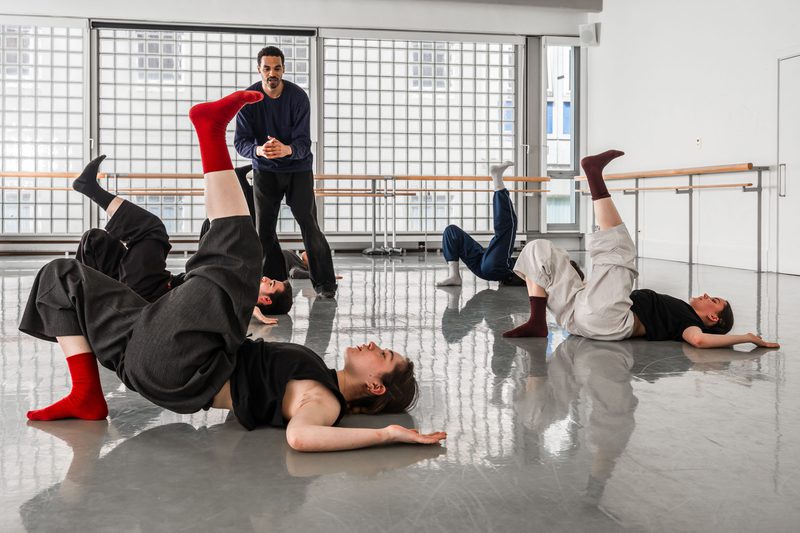
You will observe and participate in classes, experiment with pedagogical ideas in the studio, develop and teach workshops, undertake a mentored teaching placement and conduct your own practice-informed research enquiry.
Throughout the MA, you will be encouraged not simply to adopt established methods, but to question, test, adapt and develop your own pedagogical approach.
With our proud history of dance education and innovation, London Contemporary Dance School (LCDS) is recognised globally for our dance teaching expertise. We’re the only school with world-leading status that exclusively teaches dance. Our building is also a community hub, where we teach children and adults of all ages, plus pre-vocational and higher education learners. As such, your learning will be elevated by direct access to our variety of teaching expertise and one-of-a-kind opportunities to get involved.
The course is about becoming an educator who can keep learning: someone able to think critically about teaching, respond creatively to learners and contexts, and continually develop their practice.

How does the course achieve this?
Explore creativity as central to education
Creativity is at the heart of the MA and is explored as a dynamic, relational and contextual process that develops between people, bodies and environments.
You will consider both:
- creative ways of teaching – how teachers can use imagination, experimentation, variation and creative task design; and
- teaching for creativity – how educational environments can support learners to develop agency, curiosity, imagination and creative capacity.
You will investigate how creativity can question and reconfigure established approaches to dance education, while also considering its relationship to wellbeing, inclusion, identity and learner agency.
Develop your own pedagogical identity
The course does not prescribe a single model of the “good dance teacher”. Instead, you will develop your own pedagogical position and professional identity.
You will examine questions such as:
- What is dance education for?
- Who is it for?
- What does it mean to teach creatively?
- How do people learn through their bodies?
- How do culture, identity and context shape learning?
- How can teaching be responsive to different learners?
- How can technical, artistic and creative development work together?
- What responsibilities does a dance educator have towards learners?
- How can teaching practices change as our understanding of learning changes?
Your developing pedagogy will be informed by theory and research, but also by your experiences as a dancer, teacher and learner.
Learn through immersion
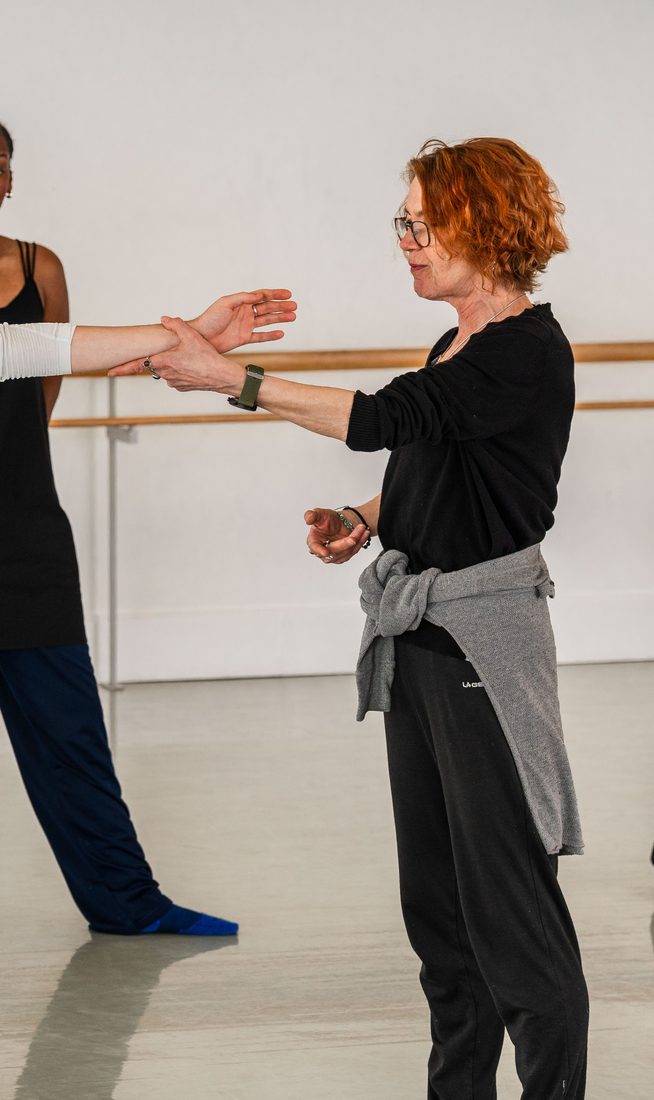
Your learning takes place within a dance training environment. You will encounter teaching across different contexts and age groups and have opportunities to observe, participate and reflect on what you experience.
You will develop ways of looking at teaching through the perspectives of both learner and educator, paying attention to how teachers structure learning, communicate, use space and rhythm, give cues, respond to learners and create relationships within the studio. You will also learn through your own participation.
This in-person immersion connects your academic learning directly to the realities of dance education.
Learn through studio exploration
The studio is a place for thinking through doing.
Throughout the course you will experiment with pedagogical ideas through practical tasks, micro-teaching, workshop design, peer teaching and feedback. You will be able to test an idea, experience its effects, reflect on what happened and reconsider your approach.
The course asks you to investigate what happens when pedagogical ideas are brought into embodied practice. This creates an ongoing cycle of:
Encountering, exploring, teaching, reflecting, questioning, adapting
Encounter diverse contexts and learners
Dance education does not happen in one kind of studio or for one kind of learner. The MA therefore considers the social, cultural and political contexts in which dance education takes place.
You will explore issues of access, inclusion, identity, culture, language, differentiation, learner agency and wellbeing, considering how pedagogical approaches need to change in response to context.
A six-week mentored placement gives you an opportunity to take this learning into a real educational setting. Placements are negotiated with you and supported by The Place, LCDS and partner organisations, allowing you to connect your developing interests with professional experience.
Connect practice with research
Research is not something that sits separately from teaching. Throughout the MA, your practice becomes a site for enquiry.
You will learn to ask questions about what you observe and experience, investigate those questions through appropriate research approaches, and use evidence and reflection to reconsider your practice.
In the final research project, you will undertake a substantial practice-informed enquiry into an aspect of creative dance education. Your research may be written, practice-based or multimodal and will be grounded in the relationship between theory, practice, embodied knowledge and critical reflection.
Key Information
What will I be studying?
The three units create a progressive journey from encountering the field, through developing your teaching practice, to generating new knowledge.
Unit 1: Mapping the Field
You begin by exploring the field of creative dance education through practice, inquiry and reflection.
You will encounter theories of pedagogy and creativity alongside embodied approaches, safe dance practice, cultural perspectives and research methods. Through observation, participation and micro-teaching, you will begin to connect these ideas with your own experience.
The aim is not simply to acquire knowledge about pedagogy, but to begin developing your own questions, values and pedagogical direction.
Unit 2: Developing Skills
You then move more deeply into teaching practice.
Through studio-based teaching, workshop development, peer feedback and a six-week mentored placement, you will develop your ability to design and facilitate learning for different groups and contexts.
You will explore designing learning including planning, sequencing, cueing, differentiation, feedback, group dynamics and inclusive practice, while considering how social, cultural and political contexts influence teaching and learning.
Reflection is central. Your experiences in the studio and placement become material for examining and developing your pedagogical practice.
Unit 3: Creative Dance Education Research Project
The final stage is an extended research enquiry.
Building on the knowledge, questions and experiences developed in Units 1 and 2, you will identify an area of interest and design a research project that makes a meaningful contribution to creative dance education.
Your research may emerge from your placement or another professional, educational or community context. With support from a specialist supervisor, you will develop appropriate research methods, consider ethics and positionality, analyse and interpret your findings, and communicate what you have discovered.
How will I learn?
Across the MA, five interconnected experiences shape your learning:
Immersion
Learning within a world-leading dance education environment and encountering teaching as it happens.
Exploration
Using the studio as a laboratory for experimenting with creative and pedagogical ideas.
Observation and participation
Learning by looking, listening, sensing, moving, participating and experiencing teaching from different perspectives.
Application and reflection
Taking ideas into practice, learning from what happens, receiving feedback and continually adapting your approach.
Inquiry and research
Developing questions from practice and using research to investigate them critically, and generate new understandings from your experience.
Together, these create a distinctive relationship between theory, embodied experience, teaching practice and research.
What are my learning outcomes?
By the end of the MA, you will be developing as an adaptable, creative and critically reflective dance educator.
You will be able to:
- Design and deliver creative and effective dance education across diverse contexts
- Understand and respond to different learners and their experiences
- Use creativity both as a pedagogical approach and as an educational purpose
- Draw on embodied, theoretical and evidence-informed knowledge
- Critically evaluate different approaches to dance pedagogy
- Experiment with and adapt your teaching rather than relying on fixed methods
- Reflect critically on your own values, assumptions, positionality and pedagogical choices
- Support learner wellbeing through holistic and enabling approaches
- Connect teaching practice with research and enquiry
- Continue developing your practice through sustained professional learning
Entry Requirements
Standard minimum entry requirements:
- BA (Hons) degree or equivalent academic qualifications
or
- APEL - Accreditation of Prior (Experiential) Learning
Applicants who do not meet these course entry requirements will still be considered. The course team will consider each application that demonstrates additional strengths and alternative evidence. This might, for example, be demonstrated by:
- Extensive teaching experience in in dance, drama, performance or similar field
- The quality of the personal statement
- A strong academic or other professional reference
- A combination of these factors
English language requirements:
IELTS level 6.5 or above, with at least 5.5 in reading, writing, listening and speaking
How do I Apply?
First, you are required to complete our online application form where you input details about yourself, your educational and employment history, and a personal statement about why you want to join our MA Creative Dance Education course.
You will then be contacted by our admissions team who will let you know if you have been invited to an interview with us. This will be hosted online by a panel of LCDS faculty.
After the interview, please allow up to 2 weeks to hear an outcome from our admissions team.
Please note: this course is subject to minimum enrolment numbers being reached. If the required number of students is not attained by 1 May 2026, the course will not proceed in September 2026. Applicants will be informed in writing and offered the opportunity to transfer to an alternative start date or course, or to have any deposits refunded.
Fees & Funding
Fees for 2026/27 and information on funding support can be found here
Postgraduate Masters Loans for Home Students
If you’re starting a master’s degree and from England, you could get a Postgraduate Master’s Loan to help with course fees and living costs. Visit the government website, where it also outlines loans available to you if you are from England, Scotland, Wales and Northern Ireland.
Frequently Asked Questions
Who is the course for?
The course is for dance artists, teachers and educators who want to deepen their understanding of how people learn through dance and develop their own creative, responsive approach to teaching.
It is particularly suited to practitioners who are curious about pedagogy and want to connect embodied practice, teaching and research. You may already have experience teaching dance, working with different participant groups or leading creative practice, or you may be looking to develop your practice in a new educational direction.
The course is for people who want to question established approaches rather than simply adopt a fixed teaching model; who are interested in how creativity, inclusion, identity, culture and context shape learning; and who are motivated to reflect on and continually develop their practice.
Whether you work with children, young people, higher education students, professional dancers, adults or specific participant groups, the MA will support you to become a more confident, critically reflective and adaptable dance educator.
What does the schedule usually look like?
The MA is a full-time course, combining taught sessions, practical experience and self-directed study.
Taught sessions with the course team usually take place in the evenings. During the day, you will have opportunities to observe and participate in dance classes across the institution, alongside dedicated study time for reading, writing and research.
The library provides computers and quiet spaces for study and research. You can also book additional studio space when needed, for example to develop projects or prepare for teaching.
In total, scheduled sessions amount to approximately 20–30 hours per week. The exact schedule varies depending on the units you are studying.
- Term 1 has the highest level of on-site activity, with taught sessions taking place every evening alongside daytime activities.
- Term 2 combines taught sessions on some evenings with a six-week placement. The placement is approximately three hours per week and may take place during evenings or weekends.
- Term 3 focuses primarily on your Final Project, with fewer scheduled sessions and more time dedicated to your own research and creative teaching.
How much of the course is delivered remotely?
In Terms 1 and 2, most sessions take place on-site at one of LCDS’s venues. Some lectures, reflection sessions and tutorials may occasionally be delivered online.
When a session is online, we aim to provide a suitable space on-site for you to attend. This means that your participation does not depend on having a quiet study space or a strong Wi-Fi connection at home.
In Term 3, you may choose to undertake your final research project outside London. Supervision and regular catch-ups with the cohort can then be organised online or in hybrid formats, allowing you to continue engaging with the course wherever your research takes you.
Do I need to arrange my own placements?
You will be supported by the course team to arrange your six-week placement in Term 2. We will draw on the wide range of activity already taking place across The Place, including:
- Creative Learning, working with schools and communities
- Classes and Courses, offering a range of dance classes and programmes
- Centre for Advanced Training, supporting young dancers in their development
For your Final Project in Term 3, you will work with the course team to identify professional, educational or community contexts and organisations that connect with your interests and research.
The level of support can be tailored to your experience and goals. You may already have an organisation or context in mind, or you may want to explore opportunities through the networks of The Place and the course team. You might also have a particular area of practice you would like to explore and need support identifying the right organisation or context.
Whatever your starting point, we will work with you to develop a placement or research context that broadens your experience, connects with your interests and supports your professional development.
How big is the cohort?
We usually have 15-20 students a year
Are there dance classes as part of the course?
The MA is not structured like a traditional professional dance programme with a daily morning class.
In Terms 1 and 2, you will have opportunities during the day to observe and participate in dance classes across the institution, experiencing a range of styles, approaches and teaching practices. Rather than attending the same class every day, you will experience a varied programme that brings you into contact with different learners, movement practices and ways of working.
These opportunities are an important part of the course’s immersive approach. You will not only dance, but also develop your ability to observe and reflect on how teaching happens and how learning is experienced in the studio.
There will also be some studio space available in the early morning for you to warm up, move and maintain your own physical practice if you wish.
Have a question we have not answered?
We are happy to answer any other questions you have. Feel free to contact the course leader Jamieson Dryburgh: Jamieson.Dryburgh@theplace.org.uk