Blog post
07 July 2026
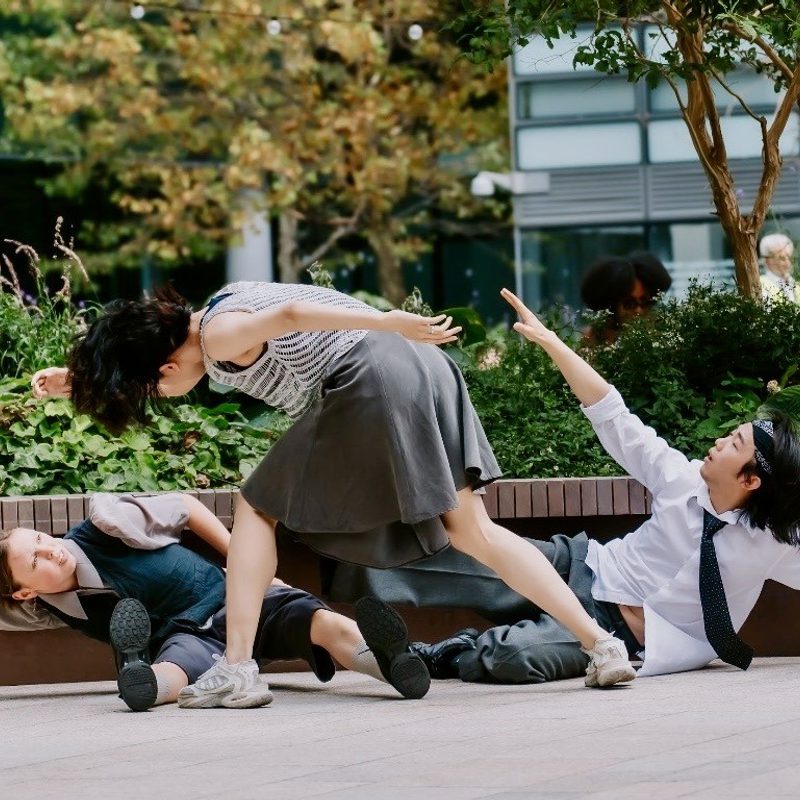
During Fai’s rehearsal process (2 July), I observed how he guided dancers to explore the Head–Tail connection as a way of developing a more integrated bodily awareness. Dancer A engaged in free movement exploration, investigating internal sensations and movement possibilities through the dynamic relationship between the head and the tail. Through this process, a highly personal movement vocabulary began to emerge. Meanwhile, Dancer B gently placed their hands on A’s head and tail, offering tactile feedback and support throughout the exploration.
What stood out to me was how A gradually expanded from Personal Space into the surrounding environment. The pathways, directions, and bodily extensions became increasingly expansive, creating a visible transition between Personal Space and General Space. The movement seemed to unfold from an inner bodily awareness toward an outward engagement with the environment. This practice not only heightened awareness of movement initiation and connectivity, but also deepened the dancer’s sensitivity to spatial use and embodied expression.
A different approach to spatial exploration emerged in Ruping’s rehearsal process. Using the image of a flock of birds in motion, she invited dancers to investigate collective movement and spatial relationships through improvisation. Although the movement material was not pre-choreographed, a clear Leader–Follower structure provided a framework within which dancers could develop movement dialogues and compositional possibilities.
One section was particularly striking. Dancers began by attending to their own Shape within Personal Space, observing how forms emerged and transformed through movement. Gradually, this awareness expanded into General Space as dancers travelled through the environment while searching for new leaders. Whenever directions or pathways shifted, dancers were required to identify a new leader and adjust their responses accordingly.
Throughout the process, Ruping (2 July) repeatedly emphasised the importance of Awareness. Dancers were asked not only to attend to the quality, direction, and clarity of their own movement and Shape, but also to remain sensitive to the positions, trajectories, and changing dynamics of those around them. As leadership roles shifted, dancers relied on visual, spatial, and movement cues to navigate these transitions while maintaining a sense of collective connection.
Watching this process prompted me to reflect on a central question: How can dancers retain their individuality while remaining deeply connected to a collective? Perhaps this tension between personal expression and group belonging is one of the most compelling aspects of improvisational choreography.
by Huang Shu Lien (Scholar)
Posted by