Blog post
For fluidity to truly occur, the entire environment must be in harmony. Every element in the chain of transmission must become a conduit; energy must not get stuck anywhere.
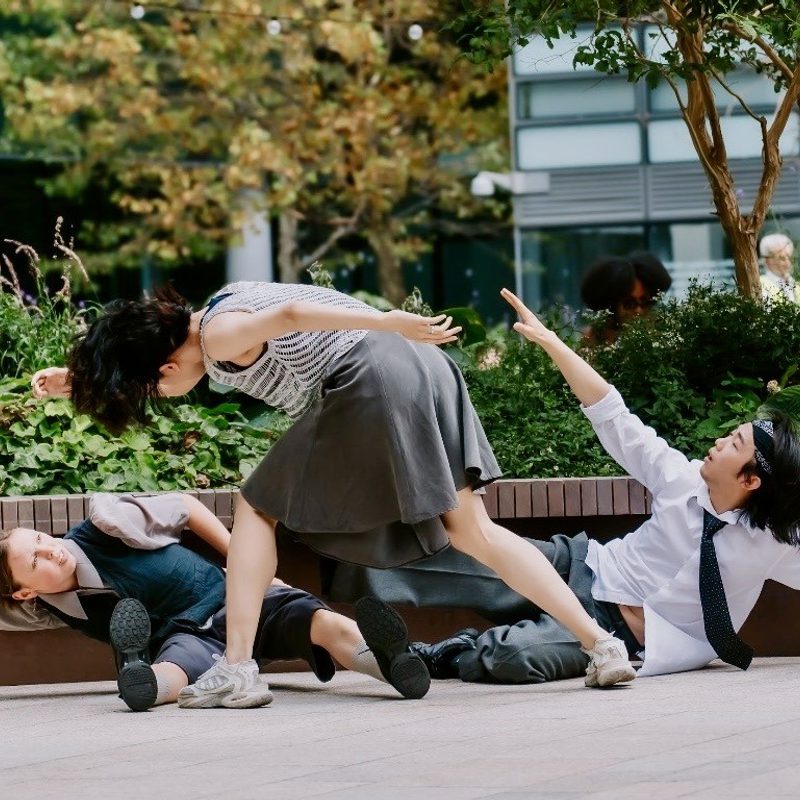
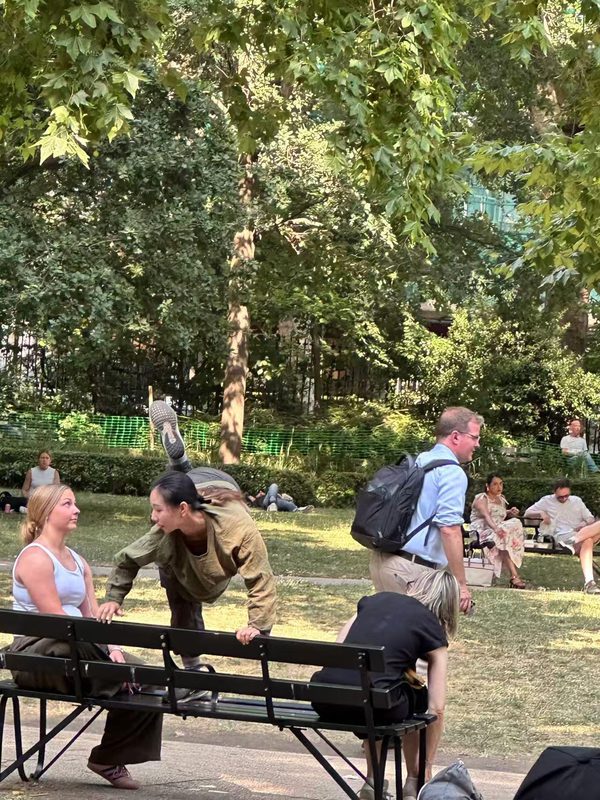
I was particularly fascinated by the responses of passersby. Would their reactions interrupt or break the flow? Londoners, to my great delight, proved to be remarkably “professional” spectators. They did not disrupt the flow; instead, they became part of the work itself.
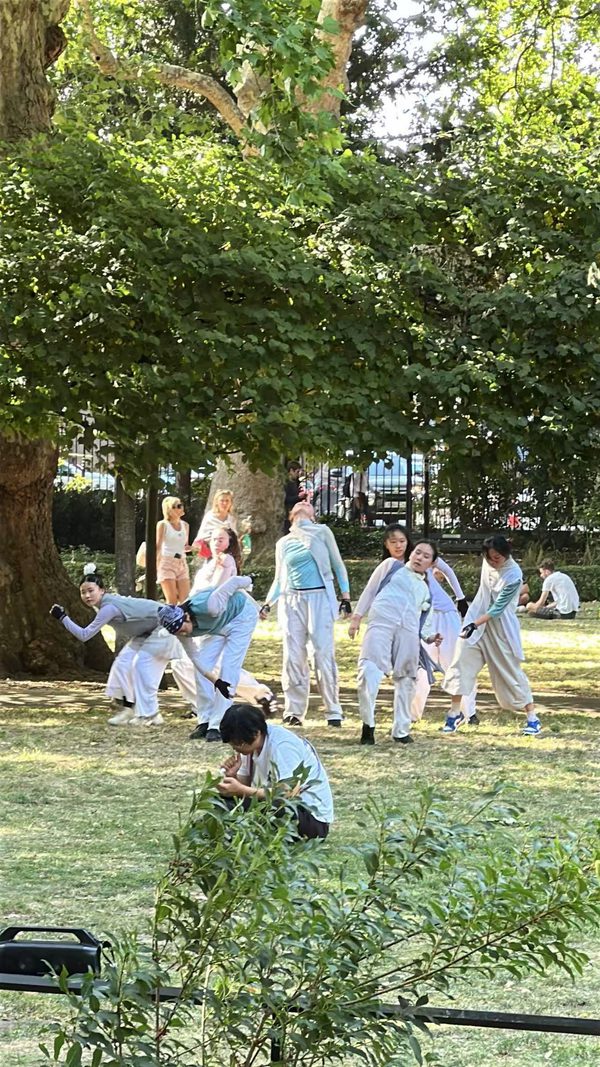
One image stays with me from rehearsal: in the middle of the lawn where Work of Fai was being performed, a young man sat reading a book. Completely undisturbed. Even as dancers surrounded him in a circle, he did not so much as look up. He was not ignoring the performance — he was, in his own quiet way, part of it.
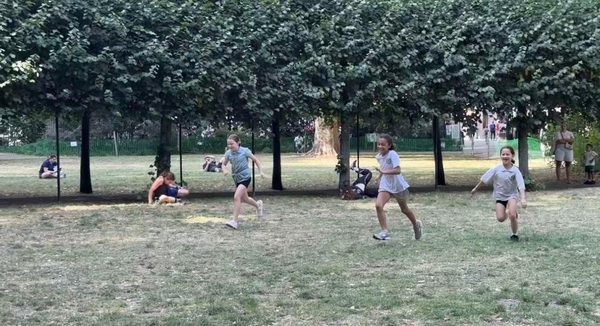
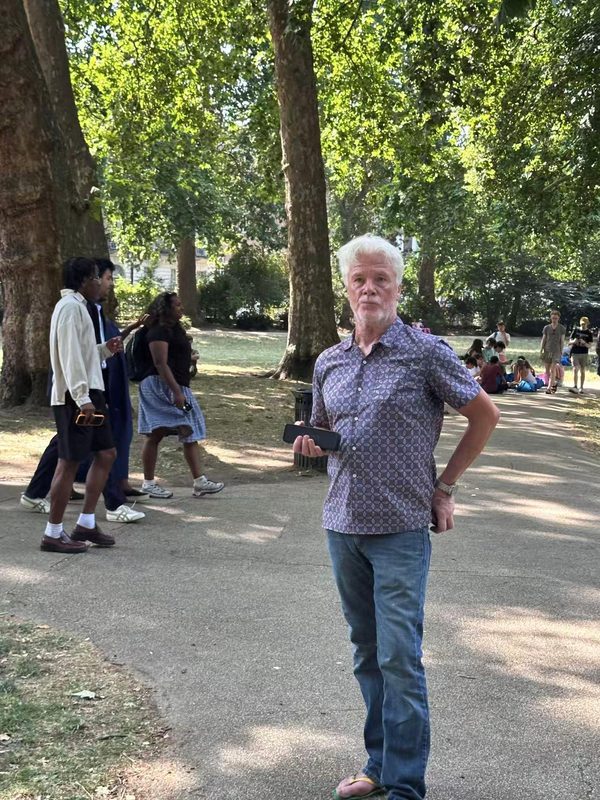
Ruping’s Work had no music. An elderly man nearby turned his own radio to maximum volume, adding music to the piece in his own interpretation. Children ran back and forth, eager to join the dance. During Ma’s rehearsal, a gust of wind swept dry grass and dust from the ground into my eyes. These random occurrences — utterly impossible in a theater — were precisely what made the experience so thrillingly unique. The accidental became part of the aesthetic.
Lately, I have been reflecting deeply on the definition of contingency. Our group has held discussions around this term. I am drawn to this concept, for I believe events do not unfold following preset logic. Variable factors emerge spontaneously on site. They are encounters arising from external circumstances, beyond the control of choreographed scripts.
Distinct from a mere accident, contingency denotes latent possibilities inherent within a given situation.
Within the open public space of Danscross (Artscross is known as DansCross in Beijing), shifting light and shadow, wandering pedestrians, wind, onlookers’ gazes and ambient sound all count as inherent onsite conditions. Dancers do not strictly follow fixed movement sequences. Instead, they embrace real‑time variables and incorporate spontaneous encounters into creation. Each performance evolves into a one‑off, instant‑generated moment.
Written by Wang Xin (Scholar)
Posted by