Press Story
8 Sept 2026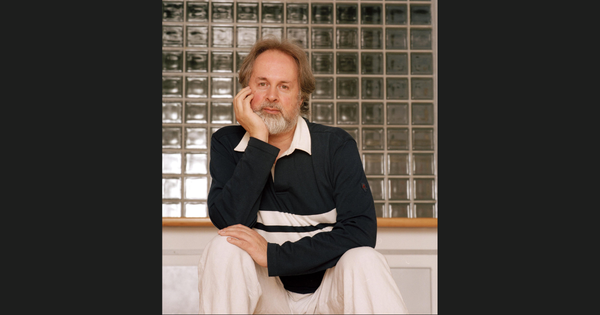
Written by Alastair Macaulay
The choreographer Richard Alston (1948-2026) died in the morning of Monday, 7 September. He loved making dances - his style was characterised both by nimble footwork and vivid use of the back - and found that dance ideas occurred fluently to him when he was with dancers he admired. He seldom began a dance because he wanted to say something by means of it; he simply made a dance – and let the meanings follow.
This faith in pure-dance values led to critics hailing him, in the early 1980s, as heir to Frederick Ashton (1904-1988), the British founding choreographer of the Royal Ballet. Ashton himself took admiring interest in Richard’s work. In 1987, on seeing Alston’s new Pulcinella, he said “Well done, dear boy, well done – you’ve illumined the music.” When Richard replied “What I’ve illumined is how many Ashton ballets I’ve borrowed steps from,” Ashton remarked “That’s what they’re there for.” Richard began to fit dances to music only when he felt he had a full enough vocabulary to do so. (On no aspect of his work was he more self-critical than about his choreography’s musicality.)
Born on October 30, 1948, in Stoughton, Sussex – the younger of two sons - he was educated at Eton College, which he left to study at Croydon Art College (an unusual change of tack for any Eton schoolboy). He was drawn to dance, around age sixteen, by two seemingly diametrically opposite paragons: the highly musical dancing of the Royal Ballet - Margot Fonteyn above all - and the radically modern choreography of Merce Cunningham, both in the late 1960s.
From the first, Richard knew he wanted more to make dances than to dance. He enrolled in 1967 at the young London School of Contemporary Dance (founded in 1966; later re-named the London Contemporary Dance School); his most important teachers included Robert Cohan and Viola Farber. While the main form of London Contemporary Dance technique, at that time, was the Martha Graham discipline, Richard preferred the faster and less floor-based Cunningham technique.
In 1968, he choreographed his first dance; in 1970, he began both to choreograph for London Contemporary Dance Theatre and to teach dance composition at the school. (In both, he was encouraged by Robin Howard, founder of The Place and of its London Contemporary dance institutions.)
In 1972, he co-founded Strider, initially a touring collective of four dancer-choreographers. This troupe, which lasted till 1975, has been called the starting point for British new or postmodern dance. Its members used choreographic forms that differed from the musical, physical, and expressionist idioms of more traditional modern dance genres. (In 1982, he was a co-founder of the prestigious Second Stride, with the choreographers Siobhan Davies and Ian Spink.)
In 1974, Richard began to teach dance technique himself. From now on, his teaching was to become an important adjunct to his choreography; he taught with love. Between 1975 and 1977, in his late twenties, he spent two years in New York, studying and choreographing principally at the Merce Cunningham Studio. He returned to London in 1977- significantly enriched in vocabulary and skill. His Rainbow Bandit (London Contemporary Dance Theatre, 1977) and his Doublework (1978, made for a season of his own) should be regarded as the first Alston masterpieces; and both had significant afterlives.
Ballet Rambert (founded by Marie Rambert, 1888-1982) had been a modern-dance company since 1965. In 1980, Alston became its resident choreographer; then, in 1985, its artistic director. The Rambert (in 1987, he had its name changed to Rambert Dance Company) offered him a wonderfully flexible musical ensemble and the opportunity to commission designs from some of Britain’s finest visual artists. The Rambert of those years felt Diaghilevian in its creation of modernist dance theatre with important modern design and music: something that was recognised with several national awards. To this day, his achievements in this Rambert era remain an artistic high-water mark for British dance theatre. The ballerina-choreographer-teacher Lynn Seymour said in 1987 that, under Alston, Rambert dancers were the finest in Britain.
In 1992-1994, British modern dance went through a convoluted game of musical chairs. This began with Richard’s departure from the Rambert and ended with his becoming artistic director of The Place and of the Richard Alston Dance Company (1994-2020), based at The Place. This company became a peak example among the world’s choreographer-led troupes for its levels of pure-dance musicality, full-bodied impetus, and speedy footwork. It toured with success around the United Kingdom, Europe and Asia, with repeated visits to New York and other cities in the United States.
Richard toured, indefatigably, with his own company. Many of his dancers became his lasting friends. He remained lovingly knowledgeable about art, architecture, and design all his life. He was a devoted reader, not least of modern fiction, and was steeped in many forms of music, above all classical music from the Renaissance to living composers. Himself gay, he remained single throughout his life. A witty, humorous man with famously twinkling eyes, he was an exceptional speaker, and was often both brilliant and generous in appreciative analysis of the work of other choreographers, from August Bournonville and Fred Astaire to Ashton, George Balanchine, Merce Cunningham, Trisha Brown, Mark Morris, Pam Tanowitz, and Twyla Tharp
In 2020, the Alston company closed. A year later, during the coronavirus pandemic, it won a National Dance Award. (Richard, honoured with a CBE in 2001, had been knighted in 2019.) A studio at The Place was given his name. Also in 2020, he was appointed resident choreographer for New York Theatre Ballet, an eclectic chamber company for which he had already choreographed new pieces and staged old ones.
A number of London Contemporary Dance School and Rambert teachers in recent years have been Alston alumni, teaching “Alston technique”: rigorous, sculptural, rhythmic, with intense use of both back and footwork so vital to him. “My work is all about falling,” he sometimes said (though it also abounded in jumping); after his death, the New York Theatre Ballet dancer Amanda Treiber wrote that he taught her ~”to be grounded, to swoon, to attack, to not attack, to be soft, and through it all he taught me to listen and the joy of dancing.” In 2025, he supervised the Rambert School in reviving a selection of his older dances, several of which he enthusiastically revised for the young dancers.
Ill health – he was diabetic – dogged his final years. His nearest living relations were his half-sister Lucy McKaskie, his cousins Sophie Chamier, Charlotte Chamier, Elizabeth Bridgewater and Grace Chamier as well as his cousins Gay, Heather and Gillian Whitworth, who re-entered his life towards its end. But the friends to whom he referred to as “family” were those he had made through dance, not least his colleague of over fifty years, Siobhan (Sue) Davies (her daughter was his goddaughter), as well as the administrators Janet (“Mop”) Eager and Val Bourne – and, among many of his former dancers, Elly Braund, Martin Lawrance, Isabel Tamen, Pierre Tappon, Kenneth Tharp, and Chris Tudor.
Sir Richard Alston. Born 30 October 1948.
Knighted in the 2019 New Year’s Honours list.
Died 7 September 2026.
We have shared a tribute to Richard from The Place here.
Richard's incredible body of work is also celebrated and preserved through the Richard Alston Foundation. Find out more here.
We know Richard was admired and loved by many across our community. We will be gathering tributes to Richard and his work here on our website. If you would like to contribute your memories, please send your message to Suzanne.Frost@theplace.org.uk