News Story
Drawing on her celebrated career as a choreographer, Eva Recacha’s research challenges the status quo in dance, to create performances that are inclusive for both artists and audiences.
Leaving her native Spain to study at London Contemporary Dance School (LCDS), Eva Recacha graduated in 2000 with a Choreography MA. She went on to perform across the UK, Spain and Switzerland, returning to the UK in 2010 to start a career in choreography. Eva has been a Place Prize Finalist twice, her work has appeared in Time Out’s Best of the Year, and her work is regularly commissioned by a range of theatres and festivals. As well as choreographing and making her own work, Eva is currently a Lecturer in Choreography and Choreological Studies at The Place.
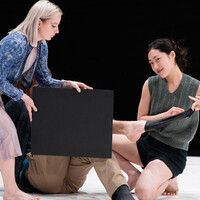
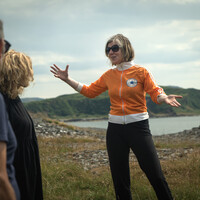
Eva’s area of research sits within the process of making and presenting work for audiences. She is interested in the investigation of compositional or craft methodologies, as well as collaborative and co-creative practices across mediums. She also explores gaps in representation that exist in the performing arts. Some of the recent creative and research projects she has worked on include Is This A Dance?, Because I Can, and The Picnic. Each of these had a piece of stage work and a public presentation. She has recently started a new research project called SUR, which is exploring audio-description as a creative tool and a creative methodology – not only as a functional tool. Through this, she is researching how to make work intrinsically accessible to everyone.
Championing the experience for all through dance
“I am interested in craft,” Eva explained. “I’m interested in things that build, sustain, repair and create community, as opposed to things that conquer, destroy, and detach.” Inspired by literary tools, the sensory experience, and questioning the status quo, Eva brings a unique approach to her work.
Through her collaboration with dancer Lauren Potter on Because I Can, Eva challenges the idea that dance is for young people. Lauren was over 60 when she performed this solo piece, and through it, Eva wanted to explore ideas of aging, memory, power and value in relation to age. Transposing the literary genre of memoir to choreographic form, the idea of the piece was to appreciate the body as an archive.
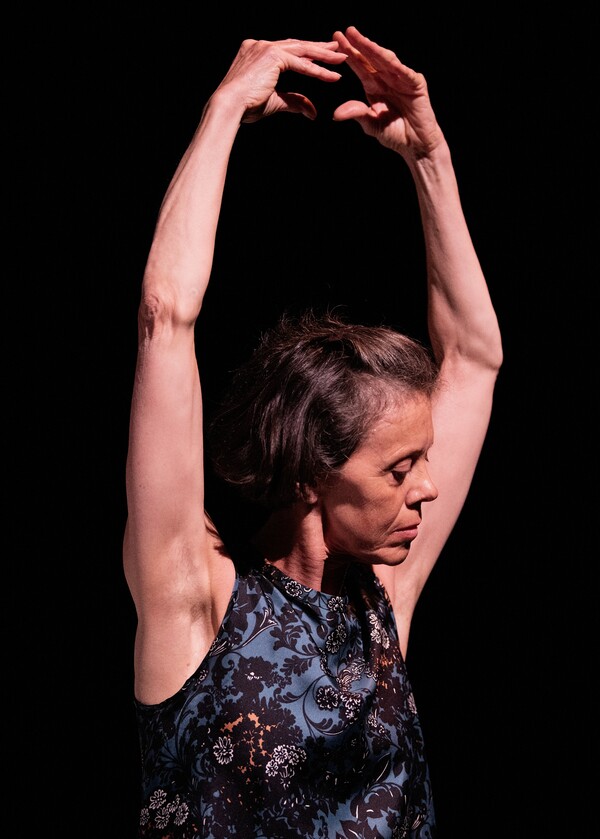
“We’re in an industry that’s about youth and energy, with lots of force and speed. Through this piece, I’m proposing we resist all the ‘epicness’. What if we do something that doesn’t need to fight to occupy its space? Through Because I Can, we brought something that does not achieve any of those staples of the dance industry. Physicality doesn’t have to be about being feisty and all-powerful. Instead, it can be an archive of all those daily occurrences that have shaped the body over the years.”
As well as a creative performance, Because I Can was a creative methodology to understand, discuss and interrogate notions of age in the dance world, and explore who can appear on stage as a dancer. Lauren was also invited to perform the piece at the Ageless Festival, where it was very positively received.
Another aspect of Eva’s work that speaks to inclusivity is SUR, a project that is currently in progress in collaboration with the sound artist Alberto Ruiz Soler. The idea of this is to use audio description as a creative tool, and not as something that comes after creating a piece of dance to make it accessible.
“It’s a layer of research on my work that looks at audio description as being a creative methodology, not merely a functional tool,” Eva explained. “We’re trying to make work that is inherently accessible, that does not need extra access tools. So we want to use the same format for people who are sighted, partially sighted and non-sighted. It's a real challenge, because audio description is a killer of excitement! It's a real balance to use it to generate something that's interesting and dramatically exciting.”
To research the best approach to this, Eva and Alberto have been consulting and holding workshops with blind people, and they’re working with consultants who specialise in audio description and in blind and partially sighted needs. “We are having constant exchange and dialogue, and we're testing our ideas,” Eva said. “We’re exploring different methods for creating something that’s not ocular centric, and that doesn’t need to be explained.”
Towards inclusion and personal experiences
Eva sees every piece of creative work or research she embarks on as a learning process. Through her work with Lauren Potter, she wanted to understand what was really important to her. “She’s a very iconic performer, she’s performed with everyone who is big in this country,” Eva said. “But all her stories were about things much closer to her, like remembering her mother in her garden. For me this was a journey of reclaiming all these things that exist in your body – those fragments of history that make you who you are, as opposed to the line of achievement.”
Similarly through her work on SUR so far, Eva is focused on listening to the experiences of the people she’s working with and trying to support. “It’s opening up my world,” Eva said. “Through the workshops with blind people, I’ve realised the words I’m using mean different things to each of us. It’s made me think about how I build an experience of a particular word in a body that’s not mine.”
Ultimately, Eva’s goal for SUR is “to generate something where you feel satisfied with what you are receiving, that you don't think that you're missing on something that other people are getting.” The process of understanding how blind and partially sighted people feel and interpret dance has showed Eva that difference is normal. “It won't be the same for everyone,” Eva said. “If you have different ways of sensing the world, you're not going to have the same experience. But I don't want someone to need an extra help to understand it.”
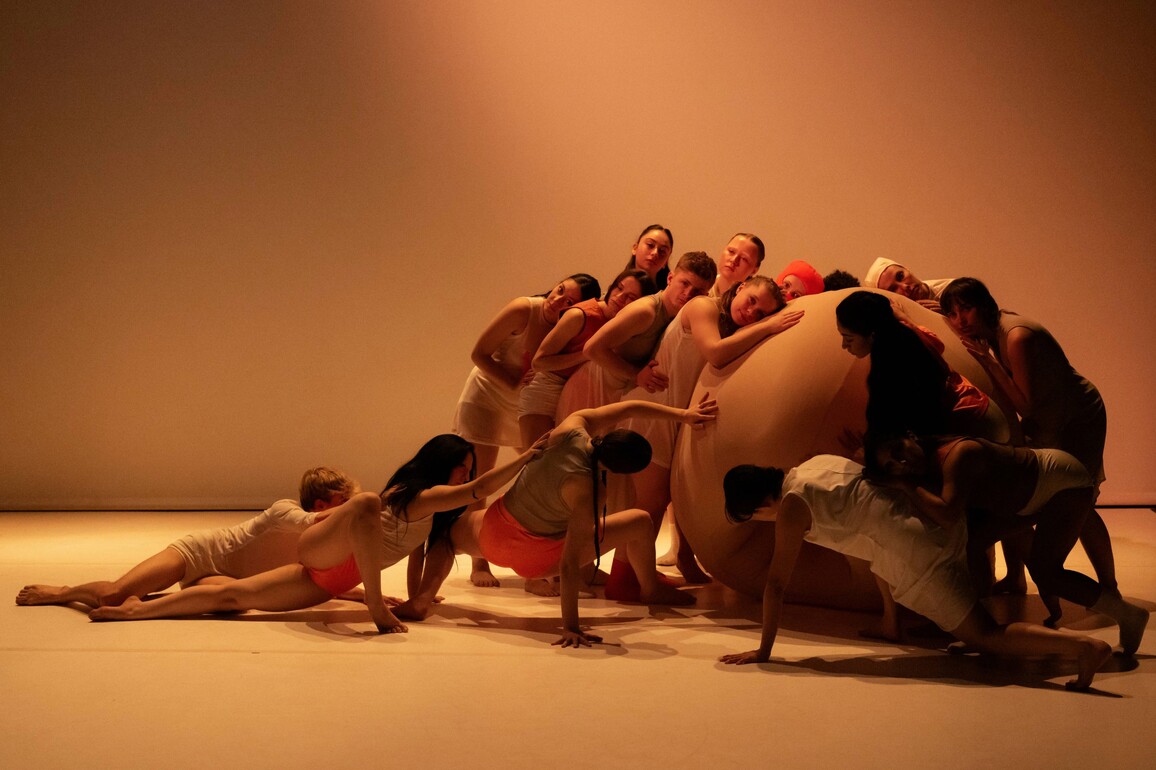
In the future, Eva would like to pursue research questions on collectivity and the identity of a group within dance. She also believes that there’s real merit in taking more notice of the things and people around us, and what we can do when we focus on community. “If we’re going to make any changes to how we live and to what are we doing to the planet, I think we really need to stop thinking about achieving and having a personal quest to thrive. We need to think about things differently.”