News Story
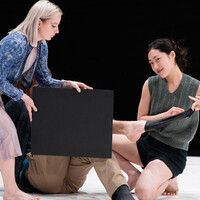
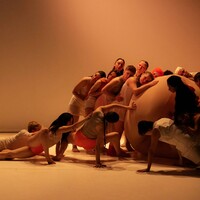
With a career in producing and artist development, Christina Elliot’s work explores how dance performances can be accessed by people who wouldn’t normally have the opportunity to experience dance.
Christina Elliot spent her early career as a theatre producer for Fuel – a producing company that works with independent artists and provides producing support. During her time at Fuel, Christina worked with a range of artists who had an experimental theatre practice, and she also gained her Master’s degree in Cultural and Creative Industries. She joined The Place in 2014 in an artist development role, before moving into her current role of Head of Programming and Producing. Through this, she oversees theatre programming, artist development programmes and producing and touring work.
In research terms, Christina has been exploring her work through a practice research lens, focusing on producing practice as a form of research. Inspired by the book A Good Night Out by theatre director John McGrath, Christina is interested in the context of a theatre or dance performance – and how this influences the audience experience of it. Through her work at The Place, Christina has been instrumental in widening audiences for dance, notably to rural communities and to young people in schools.
The context of dance performance
“The meaning of a performance is only partly about the content – it's also about the context in which it is experienced,” Christina explained. “Your lived experience informs how you interpret the work. But it’s also things like how much you’ve had to pay for tickets, and who that has excluded from the room. Where are you seeing it? To what extent is it a social gathering? To what extent are you within a community that you know, or don't know? Do you feel welcome in that? How far have you had to travel? These things are interesting because that's my domain as a producer. The creativity I bring is about shaping that context.”
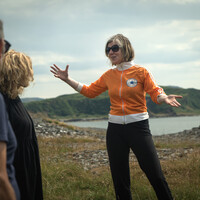
One initiative that Christina co-leads is the Rural Touring Dance Initiative (RTDI), which The Place has run, alongside its partners, for more than 10 years. The purpose is to support dance to visit village halls and small rural spaces where dance wasn’t happening before. Christina works with the various stakeholders involved. This includes dance artists, supporting them with the skills necessary to create work that can tour to rural contexts, and rural programmers – giving them the confidence to programme dance.
Over the lifecycle of the project, Christina and the team have evaluated the work, and made adjustments and modifications to maximise the impact. Early in the project, they expected audiences and rural programmers to be conservative in the type of dance they wanted to experience. “In fact, audiences have been open and curious about a range of art forms, including quite abstract dance and diasporic styles,” Christina said. They have also seen a shift in confidence in rural programmers over time, as they were initially risk averse, but now talk about programming dance with confidence. Similarly, artists have also learned adaptability from the beginning of the creative process. Many now incorporate a plan to show their work with no technical capabilities in a village hall, as well as in theatres. “They now see the rural touring ecology as a really rich outlet for their work,” Christina said. “Even in their marketing materials, they talk about their greater awareness to use very clear language and not use expert terminology.”
Another project Christina initiated is The Playground Tour, where The Place commissions work specifically to take place in school playgrounds, often adapting existing pieces made for different contexts or audiences. Last year alone, The Playground Tour reached more than 10,000 people.
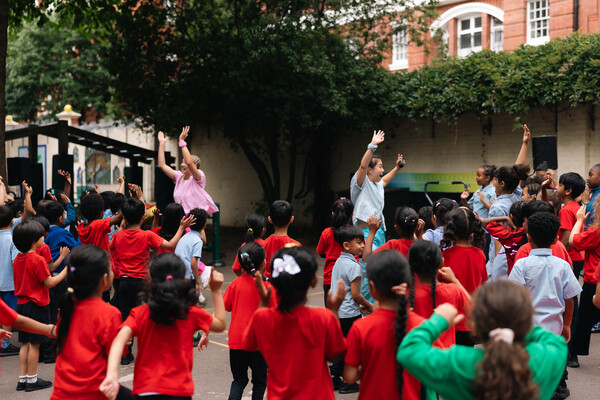
“I don’t measure success purely by the number of people we reach, but reaching this figure felt really significant because it was about what volume of change we can make. Particularly for young people, where participation in dance and attending shows in local theatres is a diminishing part of their curriculum.”
Disrupting dance to do good
Describing her goal to “disrupt the context in which the performing arts is experienced,” Christina is keen to continue working to understand the impact of this on audiences, artists and other stakeholders. “I believe that it's inherently of value for people to have this opportunity to experience an art form which encourages them to think in a different way or feel in a different way,” she said. “It broadens their perspectives on the world.”
With the current iteration of RTDI coming to an end, Christina and the team are planning to take some of the learning from this, and explore how to develop audiences for dance in other communities of place. While so-called ‘communities of interest’ are people who already have an interest in dance, ‘communities of place’ come together because of their geographical location. This work would build on the success the team has experienced through taking dance to rural communities of place in recent years.
Christina is also involved in a forthcoming project to support mid-career, independent producers to pursue their own audience development projects in Camden, the London borough The Place is located in. “There’s a sense that producers are the unsung catalysts in the dance sector, and that they're very rarely empowered with their own resources to make change,” Christina said. “It's the artists who are held up, rather than the producers. So we’re asking what would it look like to really empower a producer's vision for change in our borough of Camden?”
Believing that it’s the breadth of expertise at The Place that enables impact through projects such as these, Christina is excited about the future possibilities for her practice-based research. “The Place has a very distinct ecosystem for dance,” she said. “We have pedagogic expertise through the school and through how we run our classes and courses. We have the experience of working with professional artists. We do artist development. We have experienced producers and programmers. This means we take an empathetic approach to developing projects. It means we’re constantly finding ways to introduce people – who wouldn't otherwise experience dance – to really high quality experiences of dance.”