News Story
With a career in dance that led to a deep interest in anthropology, Dr Andrew Sanger’s research explores how movement can connect people to nature and environmental activism.
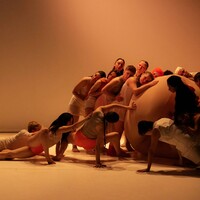
Embarking on his undergraduate dance training in the United States, Dr Andrew Sanger first discovered The Place during a study abroad trip in 2014. Developing an interest in the anthropological side to dance and movement, he moved to the UK in 2016 to complete a Dance Anthropology Master’s degree, where he focused on Gaga and animist ontology. Andrew went on to teach university students and work as a freelance performer. He later completed a PhD in Anthropology from UCL. He joined The Place in 2024 as the Unit Leader for the MA Dance: Performance – 10 years after taking his first dance class at the school.
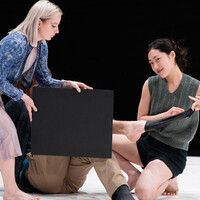
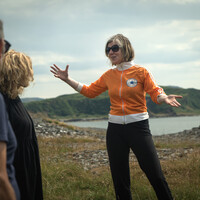
Andrew’s research interests centre on how performance and art-making can help people make sense of the world around them. His PhD was an ethnographic study of dance artists and activists who use movement as a method for promoting nature connection, or as activism on climate change. One of his recent research projects collected local narratives about the River Wandle in south-west London, and these stories were used to create a performance. He is also interested in researching how queerness shapes the way people see and interact with the more-than-human world.
Dance helps us deal with the difficult topics
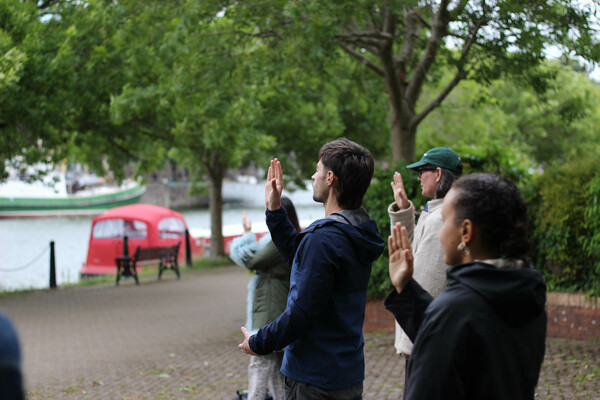
“When you’re thinking about super complicated topics such as ‘how do we deal with climate change?’ – dance is not particularly suited to solving specific climate-related issues like erosion, water scarcity, or habitat destruction,” Andrew explained. “However, it is very well suited to help us explore the socio-cultural factors of climate change such as climate grief or overwhelm, and stick with the messiness of those feelings. Which may in turn lead to action later down the line, or leave us feeling a bit more prepared to step into action and collaborate with others.”
Through his PhD research, Andrew worked with artists and activists who use movement, to encourage experiences of enchantment, wonder or awe in the familiar and everyday, to feel more connected to nature. He found that these experiences were strengthened – for both performers and audiences – through acts of storytelling, both discursive and performative. “It is through storytelling that private experiences are alchemised into public expression,” Andrew said. Although radical change may not occur immediately after seeing a performance, the process of engaging with performance can promote subtle change and nourishment. “In my PhD I introduced the idea of ‘soft activism’ to describe the type of activism that occurs through performance or movement workshops.”
One of Andrew’s recent research projects looks at climate from a different perspective. By interviewing people who live and work along the River Wandle in the Collier’s Wood area of London, Andrew was able to collect local narratives about the river, what it means to people, and thoughts individuals have about river health. Along with colleagues and recent graduates from The Place, Andrew transformed these interviews to create a verbatim performance, animating perspectives on the river through dance and movement. This was performed at the UK River Summit in July 2025.
Movement to make sense of the world
The common thread to Andrew’s research is how creativity and movement can help us understand and navigate the world.
“I’m interested in how movement as a specific art-making practice can influence the ways other people perceive the world, and then act within or upon it. I also think dance helps to give a voice – or amplify the voice – of certain perspectives that may not be so easily expressed through writing or speaking. Dance deals with ambiguity really well.”
To research the way dance can impact the wider world, it’s essential to collaborate with a variety of people. Andrew believes The Place is uniquely positioned to enable this to happen. “We have artists, students, scholars, members of the public – all these worlds are mixing every day in one building,” he said. “Having all those perspectives housed within one building is a really strong asset. It helps us position our work, reach multiple audiences, and ensure our work doesn’t get stuck in academia.”
One area of research Andrew is keen to explore further is the relationship between queerness, performance and interaction with the world. “What has always fascinated me is how I see the world in my experience as a queer man,” he said. “How does that mean I see things others don’t, or how do I question things that others take for granted? This is another strand to how performance and art-making impacts the way you navigate the world.”
Ultimately, Andrew wants to understand the interconnection between dance and more-than-human communication. “Why do people throughout our history look towards performance, to bring rain, to ask for better crops, or something else? It’s a human universal – this has always been a part of who we are.”