Fri 9 Jan: Sana El-Wakili, Esther Cheong and Paxton Ricketts
News Story
Sana El-Wakili Voices: uncut, a letter to humanity
Esther Cheong KiaSu
Paxton Ricketts Pet Peeves: an incoherent rambling
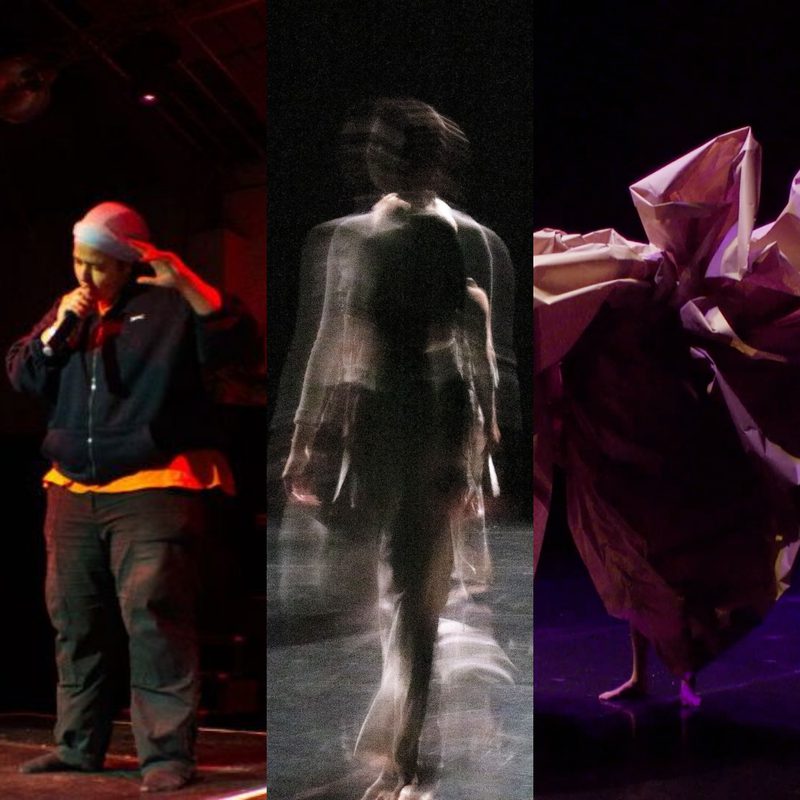
Ricketts connects a power cable to a large lightbulb, emitting a warm, orange glow. Curious, he peers underneath the strange flooring laid out before him, a huge rectangular sheet of paper covering the entire stage, and burrows underneath the paper, lighting a path as he goes. We are transported back to childhood memories of making dens, or, as suggested by the foreboding choral music, to searching for somewhere to hide. Swirling the paper around himself, an impossibly tall creature emerges with a broken lightbulb for a head, craning its neck to look around at the audience. A recorded monologue veers between broad, existential musings and smaller worries, its reflective elements playfully undercut by the continuous crunching and crackling of the paper. Ricketts’ exploratory, meandering interplay between imagination and mundanity, takes us nowhere in particular, but engages throughout.
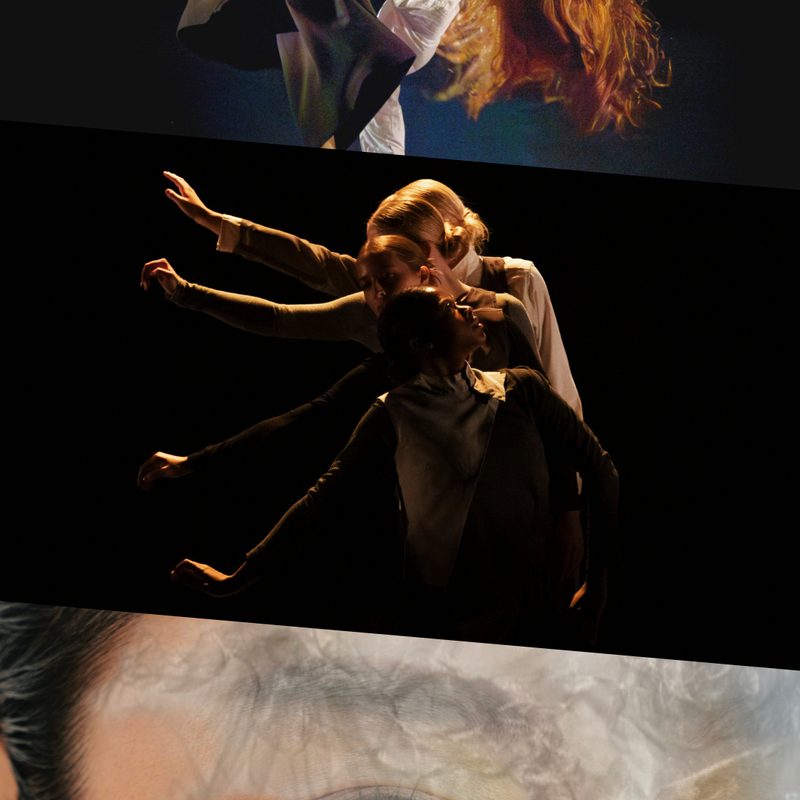
El-Wakili & Lucine deliver a timely message, but one that can lose its impact when repeated without much variation. They move onstage to a recorded poem about the injustice of the world, and what we should hold onto in the face of it all; resilience, community, and hope. The recorded spoken word piece flows continuously, with the live element of movement feeling a little lost under the weight of the words. For a moment, the audio stops, the performers vocalising their breath as they make swift, sweeping movements toward one another. This is a welcome moment of pause and presence that could have been used more to punctuate the piece's established pattern, giving the audience time to feel for themselves in response.
Esther Cheong’sKIASU, is pacey, confident, and engaging, with moments of experimental and cheeky audience interaction. Four people emerge in suits, ties, and shirts - slick and ready for business. But they seem unsure what, exactly, that business is. We see halting, hesitant steps and glances around to check what others are up to, a floaty white skirt sticking out below a formal jacket. Tension between conformity and freedom is physically marked out by a slow-motion queue formed diagonally across the stage. Performers break out into quick spats outside of it, before rejoining and falling back into an elegantly performed suspension of time to Flako’s cinematic, sparse electronic music. Dancer Nicole Maltezaki slowly gives someone the finger, turning the gesture from comedy into something more significant; the smooth, unstoppable movement of her middle finger feels monumental. Audience interactions allow the piece to take on the feel of a social experiment, witnessed in real time, and bring a sense of play and immediacy to this varied piece.
Nia Evans
There are few certainties in the dance world, but at 35 years old, The Place's annual Resolution Festival is one of them and each night is guaranteed to challenge your senses with rawness, youthful conviction and surprise. Adding spice, Friday's opening brought the surprise of a stage reconfigured in the round, leaving no room for dancers to hide. That rather implies it was a night of dance, but for the most part, it was a theatre-led evening with the spoken word doing much heavy lifting.
After ten years with Nederlands Dans Theater, Paxton Ricketts is a fascinatingly accomplished mover, but his well-named duet, Pet Peeves: an incoherent rambling, only occasionally showcased that wonderful technique. His partner was a huge, stage-sized piece of paper that enveloped him, and he takes on a journey from flat sheet to magisterial mountain, monster, cave and twisted sister. It is a work about the worries of life, addressing the darkness of self-hatred through to the mundane, audio-described by Ricketts, if I couldn't make out all the words. Better audio is needed, and while it is gloriously striking visually, it rather feels like a first draft.
Sana El-Wakili's poetic work, Voices: uncut, a letter to humanity, took the spoken word much further, yet the audio again struggled to deliver what were very heartfelt thoughts with proper clarity. It’s a work about "...humanity, peace and harmony," and the connection between El-Wakili and her stage partner, Lucine, really came across as they very slowly shuffled, caressed and gestured support to one another. It's a touching piece where I genuinely warmed to the non-dance quality of the movement, and I would like to see it again with fully accessible words.
The last piece of the evening delivered some substantial dance alongside its theatre - Esther Cheong'sKIASU for four dancers to three energising tracks. About conformity and insecurity, it starts with the cipher of a queue of life and whether one should join. For a few seconds the queue morphs into a line of fabulous Latin emotions before they become a group that rather bewilderingly seeks to interact with the audience, repeatedly shouting "Your Mum, Say One." It then returns to fast-paced hip-hop theatre movement. In a night where intentions were not always clear, this piece felt the most obtuse but featured the best group dancing, full of brio.
Bruce Marriott