News Story
Luke Marino — Deputy Technical Manager at The Place — shares how he balances technical expertise, problem-solving and creativity in his work, from managing complex productions and maintaining the theatre space to making each performance look its best.
What’s your role at The Place, and what does a typical day look like for you?
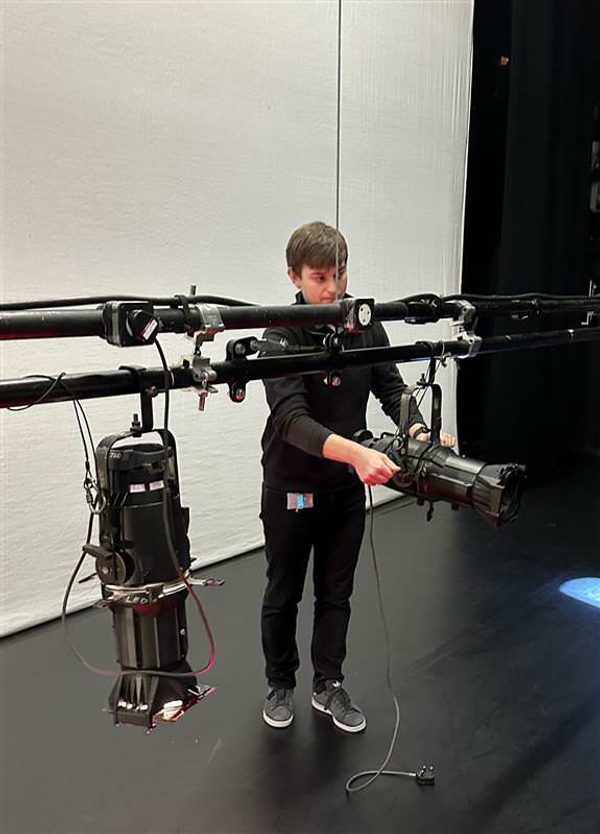
I’m the Deputy Technical Manager, which means I’m in charge of the theatre space and the day-to-day running of the theatre, looking after all the health and safety and the incoming productions. Day-to-day for me is either doing physical work in the theatre, doing the get-in, running the shows, or being in the office – responding to companies, doing pre-production planning with them, and looking over their papers.
How did you find your way to The Place?
I went to drama school, Central School of Speech and Drama, to study lighting design. While still studying, I became casual staff at The Place. After graduating, I did freelance lighting design and production work. I then worked at the Royal Opera House as first a stage electrician and then as a lighting programmer. From that point, I then applied for the role of Deputy Technical Manager at The Place, having already known it from my casual work.
What do you enjoy most about your work?
Probably the variety of it – no two days are the same. Having the mixture of the office work where I’m looking at shows coming in in a couple of months’ time and doing the planning, but then also the hands-on physicalness of getting the equipment to work and just making things look good.
What's one part of your job that people might be surprised to learn about?
How adaptable you have to be. You may think you’ve got everything planned — the specs of a show all set — but things can change so quickly, especially five or ten minutes before the show opens on some occasions. We have to be very adaptable in our quick thinking and problem-solving.
Has there been a favourite project or a standout memory during your time here so far?
A show by Lost Dog that we did where we built almost an entire house on stage with a small, slanted roof and projections mapped onto it. The complexity of the set, with the projection and lighting — that was a highlight.
Which skills do you use most often in your role?
A lot of them. I tend to analyse a lot of things, must do quick thinking, be good with problem solving, have good communication with companies and other venue staff. And be both the friendly person the company can contact and talk to but also be firm at times and make sure things are safe and achievable.


